

In Islam, the topic of a man leading a woman in prayer is often misunderstood. Scholars have discussed the conditions and guidelines of mixed-gender prayer. This article explores what Islamic teachings say, supported by Quranic verses, hadith, and fatwas. We address common concerns like male imams leading females, women praying behind men, and community prayers. Learn practical guidance for performing Salah correctly in mixed-gender settings.
Understanding the Rules: Can a Man Lead Women in Salah?
In Islamic tradition, prayer is a deeply structured act, and the role of the imam is significant. While men typically lead mixed-gender congregational prayers, Islam has specific guidelines on positioning, modesty, and conduct. Historically, women have prayed behind men to maintain decorum and focus. Leading prayer is not simply about reciting; it also requires knowledge, authority, and spiritual responsibility.
Modern scholars emphasize that mixed-gender prayer in Islam should follow etiquette: the imam must ensure the congregation maintains respect, appropriate spacing, and proper gender separation. This structure aims to balance community participation with religious decorum, especially for expatriate communities in Europe, where mixed gatherings are more common.
Scholars’ Opinions and Guidelines
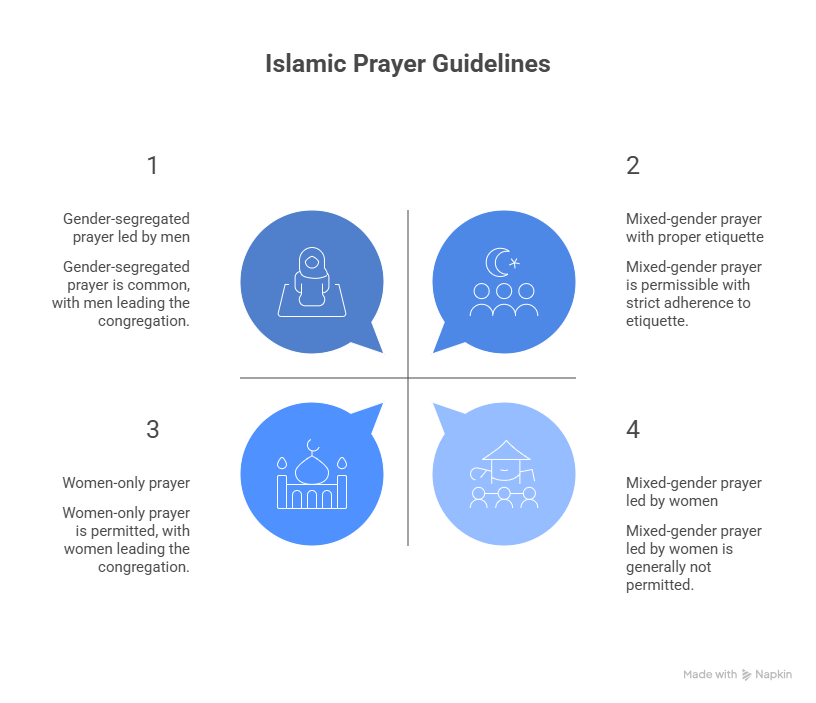
Mixed-gender prayer is a nuanced topic, and various Islamic scholars provide guidance based on hadith and fiqh.
Key Points:
- A man can lead a woman in prayer if gender segregation and proper etiquette are maintained.
- Women should pray behind men or in a separate row to ensure focus and modesty.
- Some scholars permit women to lead women-only congregations but not mixed-gender groups.
- Fatwas emphasize knowledge and piety over gender; the imam should be capable and righteous.
Ultimately, Islam prioritizes respect, spiritual focus, and decorum in Salah. Understanding these guidelines helps expatriates maintain proper practices, even with limited access to local mosques.
Historical Context and Hadith References
Historically, women have led prayers in women-only gatherings. The Prophet ﷺ allowed female leaders for groups of women while maintaining separate arrangements. Key hadiths and fiqh sources clarify the boundaries:
| Aspect | Guidance |
| Male Imam | Can lead mixed congregation if rules followed |
| Female Imam | Can lead women-only congregation |
| Prayer Position | Women pray behind men |
| Mixed Prayer | Only allowed in structured settings, with modest separation |
| Community Example | Historically, mosques maintained separate rows for men and women |
Islamic sources, including Sahih Bukhari and Fiqh manuals, confirm these practices. Modern online courses like Online Perfect Salah/Namaz Education Class and Complete Quran Hifz/Memorization Course provide guidance for families and expatriates, balancing faith and community life.
Practical Tips for Men Leading Women in Prayer
When leading a congregation that includes women, practical considerations improve the prayer experience.
Guidelines:
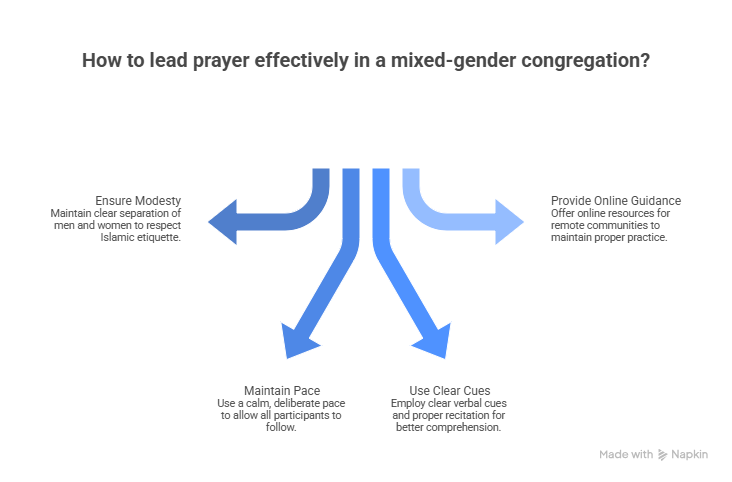
- Ensure clear separation of men and women for modesty.
- Maintain a calm, deliberate pace to allow all participants to follow.
- Use clear verbal cues and proper recitation for better comprehension.
- Online guidance for remote communities can help families maintain proper practice.
By following these steps, men can lead prayer without confusion, respecting Islamic etiquette and community harmony. Expatriates can also benefit from the Complete Quran Nazira Course to improve Tajweed and recitation skills.
Common Misconceptions
Many believe mixed-gender prayer is entirely forbidden. However, with proper etiquette, Islamic jurisprudence allows it under guidance:
- Misconception: Women cannot pray in mixed groups.
- Reality: Women pray behind men with clear separation.
- Misconception: Only men with exceptional knowledge can lead.
- Reality: The imam must be knowledgeable and pious; gender is secondary.
Proper understanding prevents unnecessary confusion and ensures spiritual focus for families, especially those balancing work and faith in Europe.
Top 5 FAQs
1. Can a man lead a woman in prayer?
Yes, men can lead mixed-gender congregational prayers if Islamic guidelines on modesty and row separation are followed.
2. Can women lead men in prayer?
Traditionally, women may lead women-only congregations but are not permitted to lead men in mixed-gender prayers according to most scholars.
3. What do scholars say about mixed-gender prayer in Islam?
Scholars emphasize proper etiquette: women should pray behind men, maintain modest spacing, and follow a knowledgeable imam.
4. Are there hadiths about women praying behind men?
Yes, hadiths in Sahih Bukhari and Muslim specify women praying behind men to maintain decorum and focus during Salah.
5. Is online mixed-gender Salah allowed?
Online guidance is permissible, especially for expatriates, as long as spiritual focus, recitation, and gender etiquette are observed.
Learn More About Proper Salah Practices. Maintaining correct prayer practices is easier with structured learning. Online courses from Madrasatun Nurul Ilm help expatriates master Salah, Tajweed, and Quran memorization.By enrolling in courses like Basic Online Noorani Qaida Class or Online Quran Learning with Tajweed, families can strengthen their Islamic foundation, overcome language barriers, and maintain consistency. Start today with a Free Trial Class and experience expert guidance tailored to your needs.