


Ramadan is a sacred month in Islam, where fasting is a core pillar of worship. Understanding Ramadan fasting rules in Islam ensures that every believer observes the fast correctly. These rules cover timing, exemptions, and actions that affect the fast. This guide explains Islamic fasting regulations in detail, including Quranic instructions and Hadith references. Whether you are a first-time observer or a returning practitioner, this comprehensive guide helps you follow the rules properly and gain maximum spiritual benefit.
Introduction to Ramadan Fasting Rules in Islam
Fasting during Ramadan is one of the five pillars of Islam, making it mandatory for every adult Muslim. Islamic fasting rules in Ramadan define what is obligatory, recommended, and prohibited while fasting. The fast begins at dawn (Fajr) and ends at sunset (Maghrib), requiring abstinence from food, drink, sexual activity, and harmful behaviors. Many expatriates, especially Bangladeshi families living in Europe, face challenges adjusting their schedules due to time zone differences, making understanding these rules essential.
Additionally, rules include specific instructions for intentions (niyyah), exemptions for travelers, the sick, pregnant women, and children who have reached puberty. Following fasting rules during Ramadan not only fulfills religious obligations but also helps Muslims spiritually, physically, and mentally. For those looking to strengthen their understanding of Quranic guidance, courses such as Tajweed with Quran or Quran memorization classes can provide structured learning.
Key Ramadan Fasting Rules According to Islam
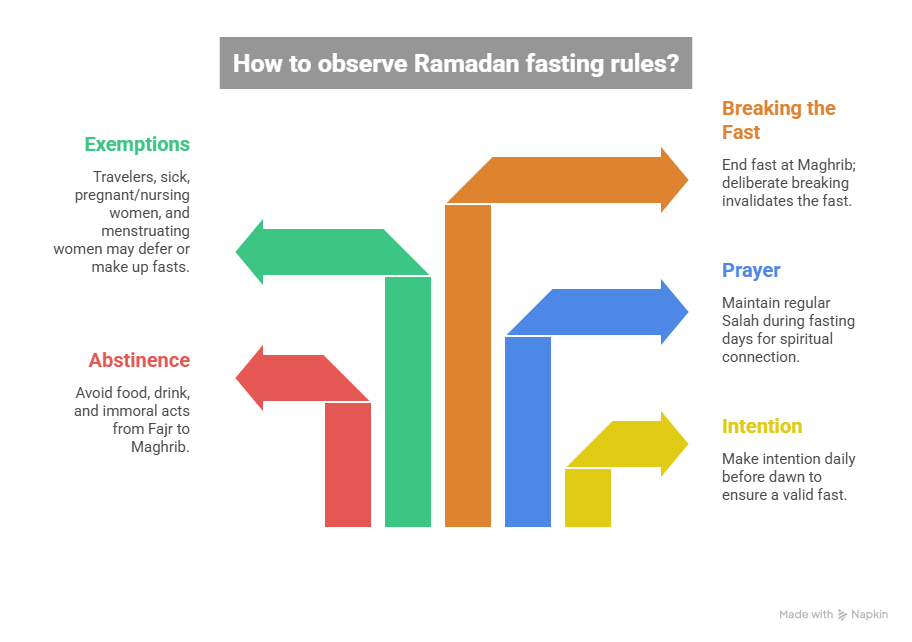
Observing the rules of fasting according to Islam ensures that your fast is valid and spiritually rewarding. Correct practice requires both intention and knowledge.
- Intention (Niyyah): Must be made daily before dawn.
- Abstinence: Avoid food, drink, sexual activity, smoking, and immoral acts from Fajr to Maghrib.
- Prayer: Maintain regular Salah during fasting days.
- Exemptions: Travelers, the sick, pregnant/nursing women, and menstruating women may defer or make up missed fasts.
- Breaking the Fast: Fast must end at Maghrib; deliberate breaking invalidates the fast.
Following these rules ensures proper worship and spiritual reward. For learners seeking guidance, online Quran courses provide step-by-step lessons on Ramadan fasting rules and practical tips for daily routines.
Fasting Rules by Timing and Actions
Timing and permissible actions during Ramadan are crucial for proper observance. Understanding these helps avoid mistakes and ensures your fast is valid.
| Timing/Action | Rule | Explanation |
| Pre-Dawn (Suhoor) | Must have intention | Begin fasting with correct niyyah before Fajr |
| Dawn to Sunset | Abstain from food/drink | No eating, drinking, or sexual activity until Maghrib |
| Maghrib (Iftar) | Fast ends | Break fast with permissible foods and prayers |
| Mistaken Eating | Does not invalidate if unintentional | Accidental consumption is excused |
| Vomiting | Does not break fast unless deliberate | Only intentional vomiting invalidates fast |
Structured awareness of these rules helps believers observe Ramadan fasting rules time in Islam correctly, ensuring spiritual and physical compliance during the holy month. Beginners and children can also benefit from basic online Quran classes to strengthen their understanding of timing and correct recitation.
Exemptions and Special Cases in Ramadan Fasting
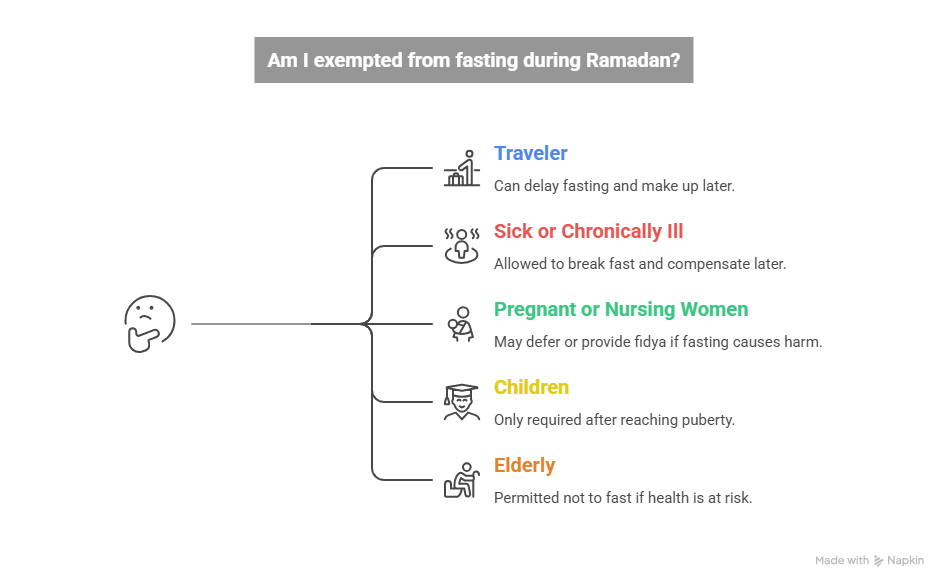
Certain individuals are exempted or given flexibility under Ramadan rules in Islam:
- Travelers: Can delay fasting and make up later.
- Sick or Chronically Ill: Allowed to break fast and compensate later.
- Pregnant or Nursing Women: May defer or provide fidya if fasting causes harm.
- Children: Only required after reaching puberty.
- Elderly: Permitted not to fast if health is at risk.
Understanding these exemptions helps Muslims observe the fasting rules of Ramadan without compromising their health. Proper guidance ensures that fasts remain valid and spiritually rewarding. Structured guidance is available in online Quran classes, helping learners maintain consistency and understand exceptions clearly.
Common Mistakes to Avoid During Fasting
Many beginners accidentally break fasts by unintentionally eating or drinking, neglecting niyyah, or skipping prayers. Others fail to adjust fasting schedules when traveling or working across time zones. Awareness of these mistakes and their correction is essential for a valid fast.
Interactive online courses, like Quran memorization with Tajweed, provide structured lessons to help learners understand fasting rules in Islam practically. Step-by-step guidance makes it easier to maintain consistency and spiritual focus while observing Ramadan, even for busy professionals or families abroad.
Top 5 FAQs About Ramadan Fasting Rules
1. What are the main rules of fasting during Ramadan?
Fasting requires abstaining from food, drink, sexual activity, and immoral acts from Fajr to Maghrib, with correct intention (niyyah) before dawn.
2. Who is exempted from fasting?
Travelers, people who are sick or chronically ill, pregnant or nursing women, children, and the elderly are exempt or may delay fasting.
3. Does accidental eating break the fast?
No, accidental eating or drinking does not invalidate the fast. Only intentional actions invalidate it.
4. Can Muslims combine fasting with work or travel?
Yes, exemptions exist for travel and certain work conditions, but missed fasts must be made up later if possible.
5. How is niyyah (intention) made for fasting?
Niyyah should be made in the heart daily before Fajr; verbal declaration is not mandatory but recommended for beginners.
Conclusion
Observing the fasting rules of Ramadan in Islam correctly ensures a valid and spiritually rewarding fast. From intentions to exemptions, timing, and prohibited actions, understanding these rules strengthens devotion and discipline. For learners seeking structured guidance, Madrasatun Nurul Ilm offers step-by-step lessons in Quran memorization, Tajweed, and Islamic teachings to make Ramadan observance easier and more meaningful.
You can start your journey with a free trial class to learn practical tips, timing adjustments, and proper fasting practices. This approach is especially helpful for expatriates balancing work, family, and spiritual commitments.