

Introducing children to Islamic knowledge early is essential for their spiritual growth. This guide simplifies core Islamic concepts for kids, including prayer, Tawheed, fasting, and manners. Parents can use interactive methods, such as games and storytelling, to support effective learning. We’ll also cover Surah memorization and practical guidance to make learning fun. By following this guide, kids will develop a strong foundation in Islamic education while enjoying the process.
Why Basic Islamic Knowledge for Kids Matters
Introducing Islamic education to children helps them develop faith, moral values, and a sense of discipline from a young age. Basic Islamic Knowledge for Kids ensures that children understand the pillars of Islam in a simple, age-appropriate way. Early learning helps children form a spiritual foundation that guides their daily life, decision-making, and interactions with others.
For parents in Bangladesh, balancing schoolwork and Islamic studies can be challenging. Online courses offer a flexible solution, allowing children to learn at home with structured lessons, qualified teachers, and interactive methods. By focusing on prayer, Tawheed, and Islamic manners, kids can naturally and consistently internalize the teachings of Islam. Programs like Madrasatu Nurul Ilm offer guided courses to help children learn in a supportive, engaging environment.
Core Concepts Children Should Learn
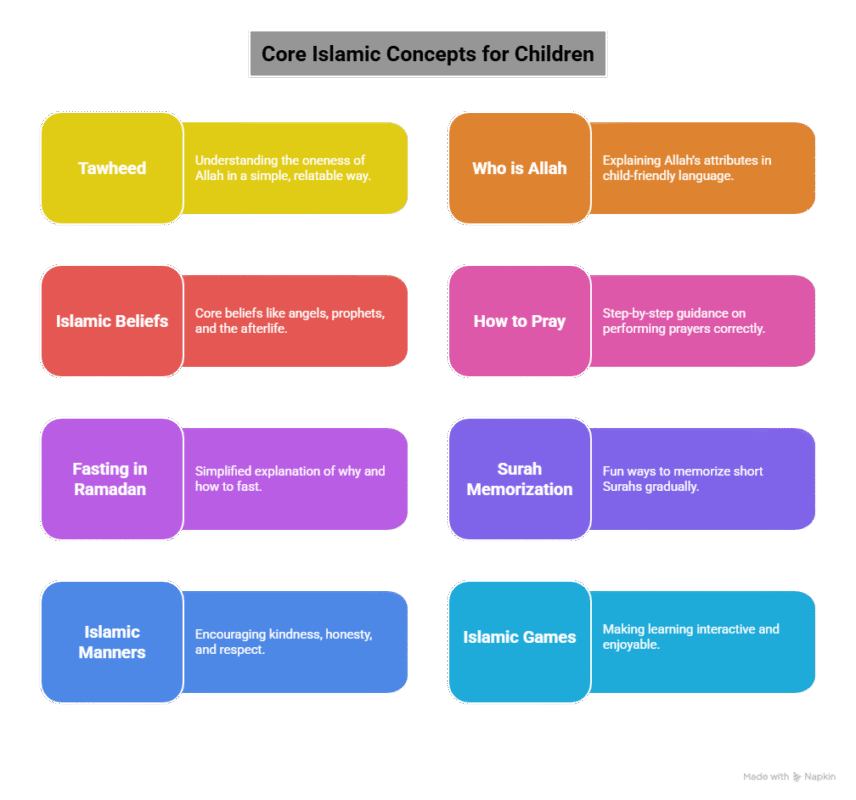
When teaching basic Islamic knowledge to kids, it’s important to focus on key areas that form the foundation of their faith. Early exposure to these concepts makes learning easier and more meaningful:
- Tawheed for kids: Understanding the oneness of Allah in a simple, relatable way.
- Who is Allah for kids: Explaining Allah’s attributes in child-friendly language.
- Islamic beliefs explained to children: Core beliefs like angels, prophets, and the afterlife.
- How to pray Salah for kids: Step-by-step guidance on performing prayers correctly.
- Fasting in Ramadan for kids: Simplified explanation of why and how to fast.
- Surah memorization for kids: Fun ways to memorize short Surahs gradually.
- Islamic manners for kids: Encouraging kindness, honesty, and respect.
- Islamic learning games: Making learning interactive and enjoyable.
By introducing these topics gradually, children can retain information more effectively. Combining lessons with stories, visuals, and practical exercises helps reinforce understanding. This holistic approach ensures kids develop both knowledge and good habits.
Interactive Methods to Teach Kids
Engaging children in learning is crucial. Interactive approaches make lessons enjoyable and memorable, improving retention and comprehension. Here are some effective methods:
| Method | Description | Benefits |
| Storytelling | Narrate Quranic stories and Prophet’s life events | Improves understanding and moral lessons |
| Islamic Learning Games | Use quizzes, flashcards, and digital apps | Makes learning fun and competitive |
| Visual Aids | Charts, illustrations, and videos | Helps children grasp abstract concepts |
| Recitation Practice | Guide kids through Surah recitation | Enhances memorization and Tajweed skills |
| Daily Practice | Encourage applying lessons in daily life | Builds habits and spiritual awareness |
Using these methods ensures children actively participate rather than passively receive information. Combining lessons with practical examples, like practicing Salah together or memorizing short Surahs daily, makes learning natural and fun. Online institutes like Madrasatu Nurul Ilm provide structured programs integrating these techniques for optimal results.
Tips for Parents to Support Islamic Learning at Home
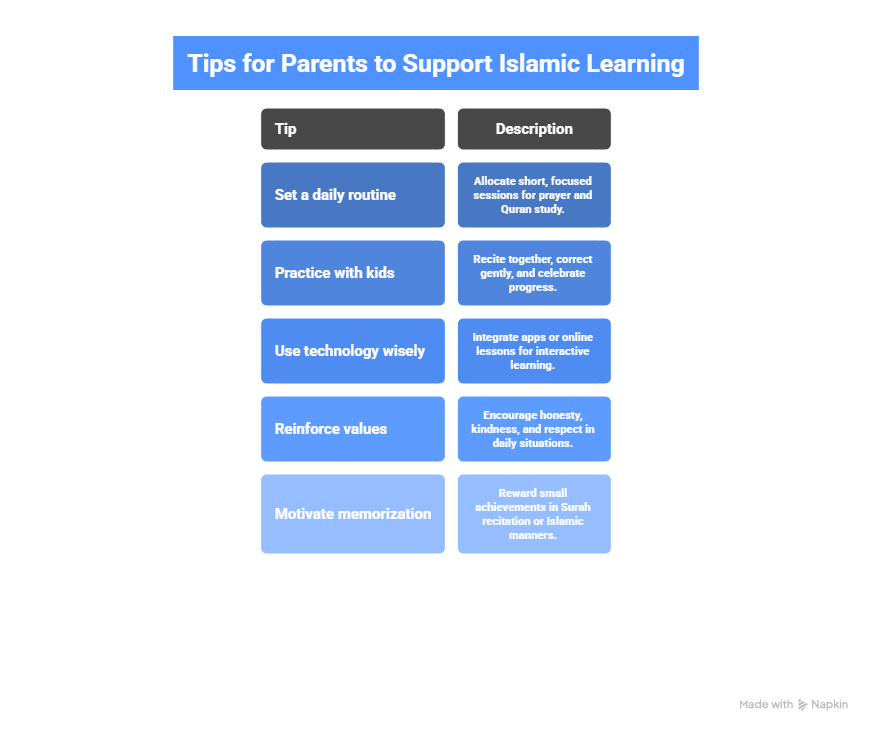
Parents play a key role in guiding kids through Islamic education. Simple, consistent practices help children retain knowledge and develop habits early:
- Set a daily routine: Allocate short, focused sessions for prayer and Quran study.
- Practice with kids: Recite together, correct gently, and celebrate progress.
- Use technology wisely: Integrate apps or online lessons for interactive learning.
- Reinforce values: Encourage honesty, kindness, and respect in daily situations.
- Motivate memorization: Reward small achievements in Surah recitation or Islamic manners.
By actively participating, parents make learning relatable and enjoyable. Children feel supported and motivated, while consistent reinforcement ensures that Islamic values become part of daily life. Institutes like Madrasatu Nurul Ilm also offer tailored courses to help parents guide their children effectively.
Common Mistakes Parents Should Avoid
Parents often face challenges when teaching Islamic knowledge at home. Avoiding these mistakes ensures smoother learning:
- Overloading children with too much information at once.
- Relying solely on memorization without understanding.
- Neglecting practical application of Islamic teachings.
- Using methods that aren’t age-appropriate or engaging.
Instead, balance fun, discussion, and practice. Encourage children to ask questions, share experiences, and connect lessons with real-life examples. Structured online programs can help fill knowledge gaps and make learning systematic. For example, Madrasatu Nurul Ilm offers a comprehensive curriculum that aims to minimize these challenges while keeping learning interactive and effective.
FAQs About Basic Islamic Knowledge for Kids
1. What is Islam for children?
Islam for children is a simplified explanation of faith, including beliefs, rituals, and manners appropriate for their age.
2. How can kids learn to pray Salah properly?
Children can follow step-by-step guidance from parents or online courses with demonstrations, starting with shorter prayers and gradually building routine.
3. What is Tawheed for kids?
Tawheed teaches children about the oneness of Allah through stories, visuals, and examples they can relate to.
4. How to help children memorize Surahs?
Use repetition, audio recitation, interactive games, and rewards to make memorization enjoyable and consistent.
5. Are there online courses for Islamic education for kids?
Yes! Platforms like Madrasatu Nurul Ilm offer structured courses for children covering Quran, prayer, manners, and more.
Conclusion
Starting Islamic education early helps children develop faith, good manners, and a moral compass. With the right approach—interactive lessons, practical guidance, and consistent support—learning becomes enjoyable and effective. Madrasatu Nurul Ilm offers structured online courses for kids to master Quran, Salah, Surah memorization, and Islamic manners from home.
📞 Enroll your child today: Call 01834-756502 or join our Free Trial Class to experience our interactive teaching. Help your child build a strong foundation in Islamic knowledge with expert guidance and fun learning methods.