


Ramadan is the most blessed month for Muslims, offering a unique opportunity to seek Allah’s mercy and forgiveness. Reciting the correct duas during Ramadan enhances spiritual connection, especially during fasting, Iftar, and night prayers. These prayers help maintain mindfulness, gratitude, and devotion throughout the holy month. From the first ten days to the last, every dua has its significance. This guide shares essential supplications to make your Ramadan spiritually rewarding and fulfilling.
Essential Duas Explained (Arabic, Transliteration & English Meaning)
Before diving into detailed guidance, here are the most important duas that every Muslim should recite during Ramadan:
1. Dua Before Starting the Fast (Suhoor):
Arabic: اللّهُمّ إني نويت صوم غدٍ عن شَهْرِ رَمَضانَ فَتَقَبَّلْهُ مِنّي
Transliteration: Allahumma inni nawaitu sawma ghaddin ‘an shahri Ramadan fataqabbalhu minni
English Meaning: “O Allah! I intend to fast tomorrow in the month of Ramadan. Please accept it from me.”
2. Dua While Fasting:
Arabic: وَبِصَوْمِ غَدٍ نَوَيْتُ مِنْكَ رِضًا
Transliteration: Wa bisawmi ghaddin nawaitu minka ridha
English Meaning: “I intend to fast tomorrow for Your pleasure, O Allah.”
3. Dua at Iftar (Breaking the Fast):
Arabic: اللّهُمَّ إنّي لك صُمْتُ وَبكَ آمَنْتُ وَعَلَيْكَ تَوَكَّلْتُ وَعَلَى رِزْقِكَ أَفْطَرْتُ
Transliteration: Allahumma inni laka sumtu wa bika aamantu wa ‘alayka tawakkaltu wa ‘ala rizq-ika-aftartu
English Meaning: “O Allah! I fasted for You, and I believe in You, and I put my trust in You, and with Your provision I break my fast.”
4. Dua for Forgiveness:
Arabic: رَبَّنَا ظَلَمْنَا أَنفُسَنَا وَإِن لَمْ تَغْفِرْ لَنَا وَتَرْحَمْنَا لَنَكُونَنَّ مِنَ الْخَاسِرِينَ
Transliteration: Rabbana zalamna anfusana wa in lam taghfir lana watarhamna lanakoonanna min al-khasireen
English Meaning: “Our Lord! We have wronged ourselves. If you do not forgive us and have mercy upon us, we will surely be among the losers.”
5. Dua for Night Prayers (Taraweeh/Tahajjud):
Arabic: اللّهُمَّ اجعلنا من عُتَقَائِكَ مِنَ النّار
Transliteration: Allahumma aj‘alna min ‘utqa’ika min an-nar
English Meaning: “O Allah! Make us among those whom You save from the Hellfire.”
6. Dua for Laylatul Qadr (The Night of Decree):
Arabic: اللّهُمَّ إنَّكَ عَفُوٌّ تُحِبُّ العَفْوَ فَاعْفُ عَنّي
Transliteration: Allahumma innaka ‘afuwwun tuhibbul ‘afwa fa’fu ‘anni
English Meaning: “O Allah! You are Most Forgiving, and You love forgiveness; so forgive me.”
These are the authentic and highly recommended duas for fasting, Iftar, night prayers, and Laylatul Qadr. Understanding and reciting them correctly strengthens spiritual connection, mindfulness, and devotion during Ramadan.
Understanding Duas for the Month of Ramadan
Reciting duas for Ramadan is a crucial part of worship that guides Muslims to seek Allah’s blessings, forgiveness, and spiritual growth. During fasting, Iftar, and night prayers, these supplications bring focus and purpose to every act of worship. Many Bangladeshi expatriates in Europe face challenges such as time zone differences, language barriers, and busy schedules, making it harder to maintain consistency.
However, with proper guidance and structured learning, these obstacles can be overcome. Incorporating daily duas to recite in Ramadan ensures that every prayer is meaningful and aligns with Islamic teachings. Platforms like Madrasatun Nurul Ilm offer online lessons, helping learners memorise and understand each dua while accommodating their unique schedules. This ensures a spiritually fulfilling Ramadan experience, even for busy families and professionals abroad.
Essential Duas to Recite During Fasting
During fasting, reciting duas for Ramadan enriches the spiritual rewards of abstaining from food and drink. These supplications strengthen patience, gratitude, and devotion, making every fast more meaningful. Beginners and advanced learners can benefit from understanding the correct dua timings and pronunciation.
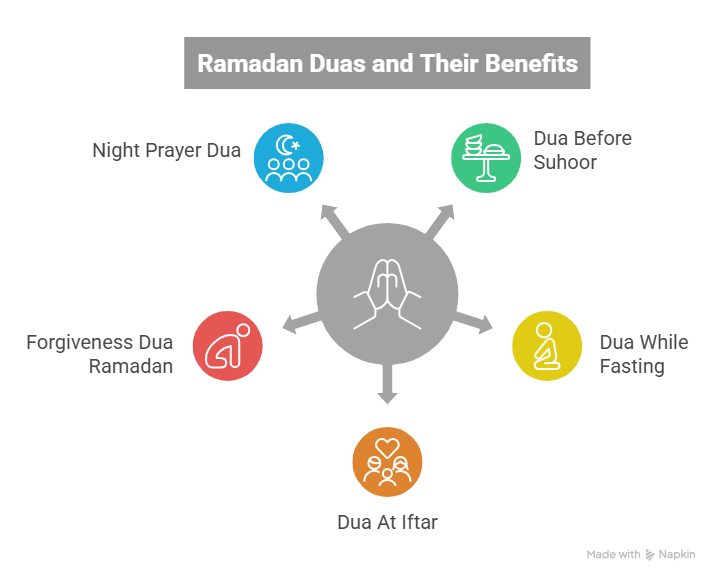
- Dua before Suhoor: Seeks blessings for the pre-dawn meal.
- Dua while Fasting: Strengthens patience and mindfulness during the day.
- Dua at Iftar: Expresses gratitude for nourishment and Allah’s mercy.
- Forgiveness Dua Ramadan: Seeks Allah’s pardon for sins.
- Night Prayer Dua: Enhances spiritual connection during Taraweeh and Tahajjud.
Consistently reciting these good duas for Ramadan improves spiritual focus. Online platforms like Madrasatun Nurul Ilm offer structured guidance and expert teaching for Bengali-speaking students. With correct pronunciation and understanding, these duas become part of daily worship, making Ramadan a more fulfilling and spiritually transformative experience.
Duas for Different Days of Ramadan
Each phase of Ramadan has distinct spiritual importance, and reciting specific duas for the month of Ramadan helps maximise rewards. The first ten days emphasise Allah’s mercy, the middle ten focus on forgiveness, and the last ten encourage seeking protection from sins and closeness to Allah. For Bangladeshi families living abroad, this structured approach ensures meaningful spiritual engagement despite busy schedules.
| Days of Ramadan | Recommended Duas | Purpose |
| 1st – 10th | Dua for starting month of Ramadan | Seeking Allah’s mercy and blessings |
| 11th – 20th | Forgiveness Dua Ramadan | Asking for forgiveness and purification |
| 21st – 30th | Dua for last day of Ramadan | Protection from sins and acceptance of deeds |
Following these structured prayers helps believers remain mindful and grow spiritually. For learners struggling with Arabic pronunciation or understanding, joining online courses at Madrasatun Nurul Ilm provides step-by-step instruction. This combination of knowledge, practice, and expert guidance allows students to recite Ramadan prayers accurately, maintain consistency, and experience the full blessings of the holy month.
Top Duas for Special Ramadan Occasions
Certain nice duas for Ramadan are particularly recommended for special occasions to maximise spiritual rewards. For example, the duas for the first ten days focus on seeking mercy, while night prayer duas during Taraweeh or Tahajjud strengthen the connection with Allah. The dua for ending Ramadan expresses gratitude for completing the fast, and duas for Laylatul Qadr are recited to earn maximum reward.
Other important supplications include those for Suhoor and Iftar, which encourage mindfulness, patience, and devotion. Many learners face challenges with pronunciation or memorisation, especially Bengali expatriates. Joining online lessons at Madrasatun Nurul Ilm ensures correct recitation and a deeper understanding. This structured learning approach helps learners maintain focus and consistency, making their Ramadan prayers meaningful even amid work, family commitments, and time zone differences.
Learning and Memorising Duas Effectively
Memorising essential duas for the month of Ramadan can be difficult for busy families and professionals living abroad. Many learners struggle with Arabic pronunciation and understanding, which can reduce confidence in recitation. By breaking the duas into smaller parts, practising consistently, and learning their meanings, students gradually internalise each supplication and strengthen their spiritual connection.
Institutes like Madrasatun Nurul Ilm provide structured, interactive courses for Bengali-speaking learners worldwide. With experienced teachers, personalised feedback, and guided lessons, students gain confidence in reciting and memorising Ramadan duas. This ensures consistent practice despite time zone challenges and busy schedules, making the holy month more spiritually rewarding for learners of all ages and levels.
Top 5 FAQs About Duas for Ramadan
1. What are the most important duas for Ramadan?
The most important include the duas for the start of the month, fasting, Iftar, night prayers, forgiveness, and Laylatul Qadr. Reciting them daily enhances spiritual growth and mindfulness.
2. Can I learn these duas online?
Yes! Platforms like Madrasatun Nurul Ilm provide Bengali-speaking teachers who guide learners step by step, making recitation and memorisation easier.
3. How do I memorise Ramadan duas effectively?
Start with a few duas daily, use transliteration, understand the meanings, and practice consistently. Online courses and apps help track progress and pronunciation.
4. Are there special duas for the last 10 days of Ramadan?
Yes, the last ten days focus on forgiveness, protection against sin, and achieving spiritual elevation, especially during Laylatul Qadr.
5. Can children learn these duas?
Absolutely! Beginner-friendly classes like Basic Noorani Qaida offer fun, structured lessons that help children learn proper recitation and develop a better understanding.
Conclusion
Reciting the correct duas during Ramadan ensures a spiritually fulfilling experience. From fasting to night prayers, these supplications guide believers toward patience, gratitude, and forgiveness. At Madrasatun Nurul Ilm, we offer online Quran classes, Tajweed lessons, and memorisation courses for Bengali-speaking learners worldwide.
Start your journey today by joining our free trial classes here. With expert teachers, structured guidance, and interactive lessons, you can master Ramadan duas confidently. Make this Ramadan spiritually rewarding for you and your family, even if you live abroad or face time zone challenges.