

Creating an environment for Islamic learning at home is essential for nurturing children’s faith and values. Parents can guide Quran learning, teach Islamic manners, and build strong moral foundations. With the right strategies, Islamic studies can become a part of daily routines. Online Islamic classes for kids make learning easier and more interactive. This guide outlines practical steps to turn your home into a hub of Islamic education.
Why Islamic Learning at Home Matters
Islamic learning at home allows parents to directly influence their children’s faith, character, and daily habits. Children who learn Islam in a loving, home-based environment are more likely to internalize Islamic values and develop a strong connection with the Quran. With limited time for formal classes, home-based learning ensures children get continuous guidance.
Parents often struggle to balance work and religious education, but creating a structured routine can help. For example, dedicating 20–30 minutes daily to Quran reading or Islamic storytelling can make a significant difference. Home-based Islamic learning encourages children to practice prayer, learn the Arabic alphabet, and understand basic Islamic principles early. By combining interactive lessons, storytelling, and regular discussion, children feel engaged and motivated.
Practical Ways to Teach Islam to Children at Home
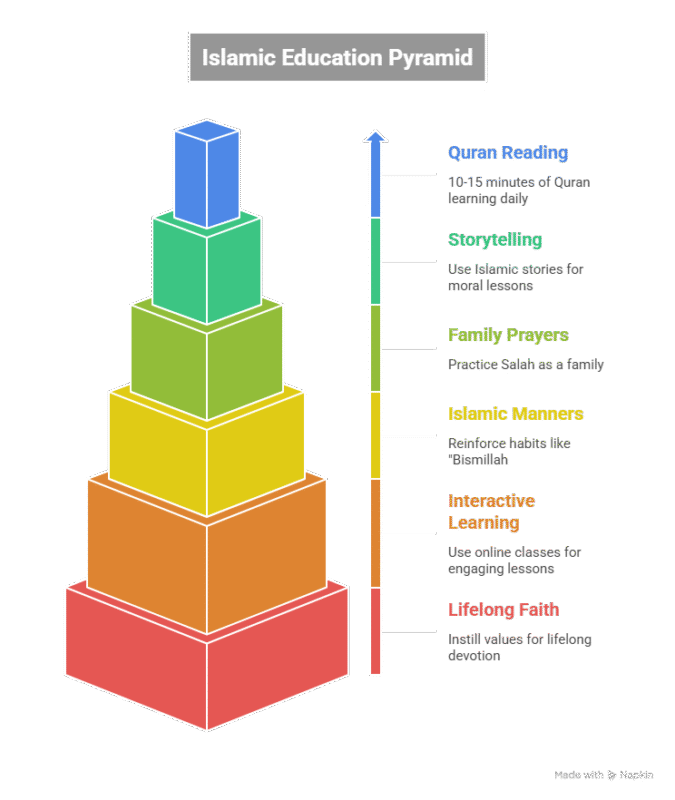
Introducing Islamic studies for children doesn’t have to be complicated. Here are practical methods:
- Daily Quran Reading: Encourage 10–15 minutes of Quran learning at home.
- Storytelling: Use Islamic stories to teach moral lessons and the lives of historical prophets.
- Prayers Together: Practice Salah as a family to model proper worship.
- Islamic Manners: Reinforce simple habits like saying “Bismillah” and “Alhamdulillah.”
- Interactive Learning: Use online Islamic classes for kids to make lessons engaging.
By following these methods, parents can naturally instill Islamic values and habits in their children. Children learn best through observation, so seeing parents practice Islam daily strengthens their learning and devotion. Home-based Islamic education creates a foundation for lifelong faith, curiosity, and understanding.
Creating a Structured Islamic Learning Schedule
Creating a daily schedule helps children stay consistent in their Islamic education. Here’s a simple example:
| Time of Day | Activity | Duration | Notes |
| Morning | Quran reading & Tajweed practice | 15 mins | Start with short Surahs |
| Afternoon | Islamic stories & values discussion | 20 mins | Include real-life examples |
| Evening | Salah practice & Duas | 15 mins | Teach proper steps & manners |
| Weekend | Online Islamic classes for kids | 30-40 mins | Encourage questions & interaction |
A structured schedule ensures children learn progressively without feeling overwhelmed. Parents should adapt timing based on the child’s age and attention span. Using online courses, like those offered by Madrasatu Nurul Ilm, can supplement learning and provide expert guidance. By maintaining routine and consistency, children develop a strong connection with Islam while enjoying the learning process.
Top Tips to Build Islamic Values and Habits for Children
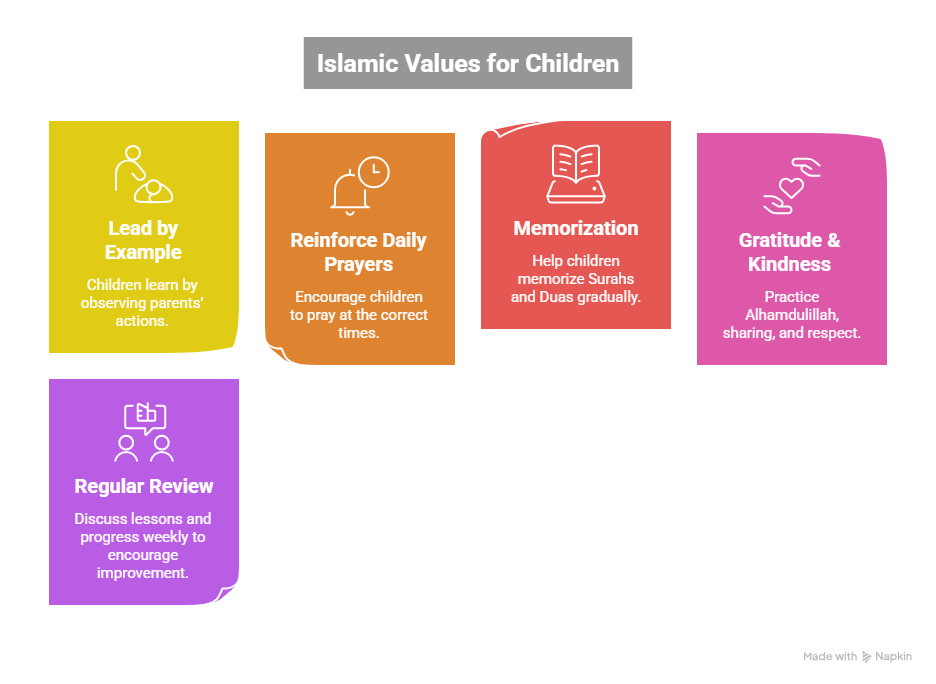
Instilling Islamic habits for children at home strengthens their faith and character. Here’s how parents can approach it:
- Lead by example: Children learn by observing parents’ actions.
- Reinforce daily prayers: Encourage children to pray at the correct times.
- Memorization: Help children memorize Surahs and Duas gradually.
- Gratitude & kindness: Practice Alhamdulillah, sharing, and respect.
- Regular review: Discuss lessons and progress weekly to encourage improvement.
These small but consistent actions create a nurturing environment. By focusing on daily practice rather than perfection, parents can build children’s confidence and enthusiasm for Islamic learning. This approach ensures children grow with solid faith, knowledge, and ethical understanding.
Benefits of Combining Home-Based Learning with Online Classes
Parents often face challenges such as a lack of structured guidance or difficulty teaching Tajweed and Quran recitation. Online Islamic classes can effectively fill these gaps.
With programs like Madrasatu Nurul Ilm’s Quran learning at home courses, children can:
- Learn from experienced teachers online
- Improve Tajweed and recitation skills
- Engage in interactive lessons tailored for different ages
Combining home-based practices with online Islamic education ensures children receive consistent learning, personal attention, and expert feedback. This hybrid method also makes learning flexible and convenient for busy families while maintaining quality Islamic education. Parents can confidently guide their children, knowing professional support is available.
FAQs About Islamic Learning at Home
1. How can I start teaching Islam to my children at home?
Start small with daily Quran reading, basic prayers, and simple Islamic stories. Gradually introduce more advanced lessons.
2. Are online Islamic classes effective for kids?
Yes, they provide structured guidance, interactive learning, and expert instruction, making learning fun and consistent.
3. How do I encourage my child to memorize the Quran?
Use short Surahs, daily repetition, positive reinforcement, and combine with online Tajweed guidance.
4. At what age should children begin Islamic education?
Children can start as early as 3–4 years old with simple stories, dua, and basic Islamic manners.
5. How can parents balance work and Islamic learning at home?
Create short, daily routines for the Quran, prayers, and values teaching. Use online classes to supplement learning when parents are busy.
Conclusion
Creating a home filled with Islamic learning is both achievable and rewarding. By combining daily routines, moral guidance, and online courses, children grow with faith, knowledge, and values. Parents in Bangladesh can now easily access Madrasatu Nurul Ilm for expert online Islamic classes for kids, making Quran learning at home simple and interactive. Start today with a free trial class and make your home a nurturing place of Islamic education for your children.