

Preparing children for Ramadan is essential for helping them understand and enjoy this holy month. Parents can teach kids about fasting, prayer, and Islamic values in a fun and engaging way. Kid-friendly activities and simple explanations make learning meaningful. This guide offers practical tips, creative ideas, and resources for children of all ages. Learn how to make Ramadan memorable, educational, and spiritually rewarding for your family.
Understanding the Importance of Preparing Children for Ramadan
Ramadan is not just about fasting; it is an opportunity for children to learn patience, empathy, and spiritual discipline. Preparing children for Ramadan helps them develop a strong connection to their faith early on and makes the month more enjoyable for the entire family. Parents often struggle to explain fasting, prayer timings, and the significance of Ramadan in ways that children can grasp.
Starting preparations early allows children to slowly adjust to new routines, understand the meaning behind fasting, and participate in family prayers. Introducing small activities like storytelling, practicing Wudu, or memorizing short Surahs can build confidence. Teaching children about Ramadan also strengthens family bonds, making the experience holistic and spiritually enriching. For guided courses on teaching kids about Islam, parents can explore our online courses designed for children.
Kid-Friendly Ways to Teach Children About Ramadan
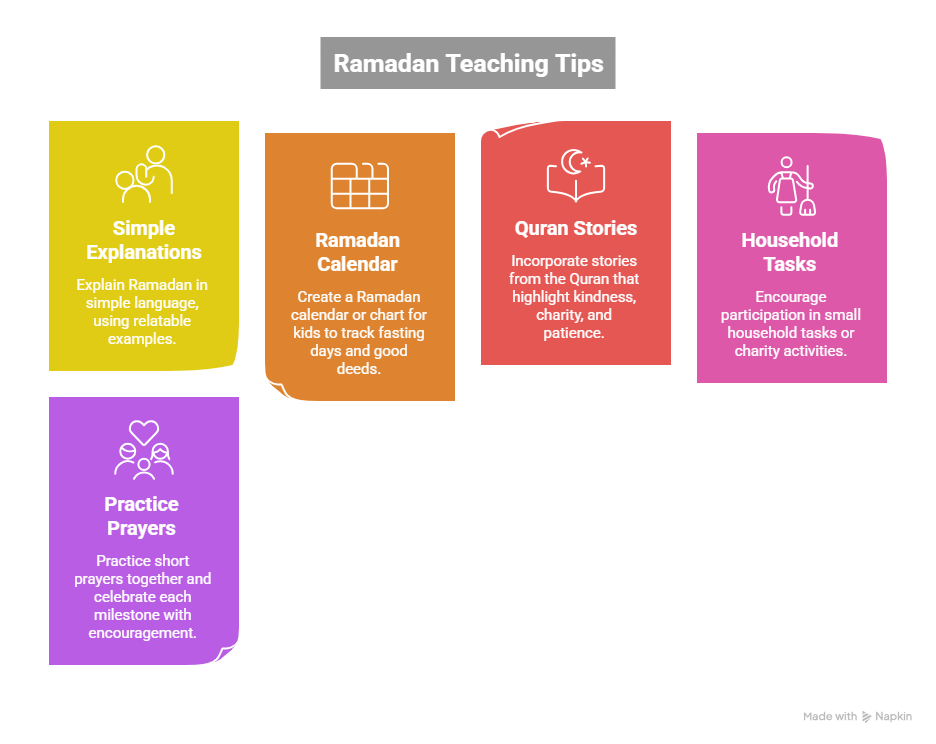
Introducing children to Ramadan in fun and interactive ways helps them embrace the month with excitement and understanding. Parents can use creative techniques to make learning memorable.
Practical Tips for Teaching Kids:
- Explain Ramadan in simple language, using relatable examples.
- Create a Ramadan calendar or chart for kids to track fasting days and good deeds.
- Incorporate stories from the Quran that highlight kindness, charity, and patience.
- Encourage participation in small household tasks or charity activities.
- Practice short prayers together and celebrate each milestone with encouragement.
By turning lessons into fun activities, children are more likely to understand the significance of fasting and develop a habit of practicing Islamic values. With consistent guidance, even younger children can feel a sense of accomplishment and spiritual growth. Parents can also consider our free trial classes to help kids learn the Quran and basic Islamic practices before Ramadan.
Ramadan Activities for Kids – Structured Plan
Creating structured and engaging Ramadan activities makes learning meaningful while keeping
children motivated. Below is a simple table with age-specific activities:
| Age Group | Activity Idea | Learning Outcome |
| 4–6 years | Coloring Ramadan-themed worksheets | Understanding symbols, fun engagement |
| 7–9 years | Memorize short Surahs and dua | Quran memorization, spiritual growth |
| 10–12 years | Volunteer or donate with parents | Empathy, charity awareness |
| 13+ years | Gradual fasting practice and reflection | Patience, discipline, spiritual maturity |
These activities help children internalize the values of Ramadan while keeping them entertained and engaged. Using age-appropriate exercises ensures children do not feel overwhelmed, especially when introducing fasting. Parents can incorporate creative techniques like storytelling, arts and crafts, or kid-friendly iftar ideas to enhance learning.
Our courses also provide guidance on teaching Quran and Islamic practices tailored for different age groups. By creating a balanced routine, Ramadan becomes a positive and memorable experience for children.
How to Explain Ramadan to a Child
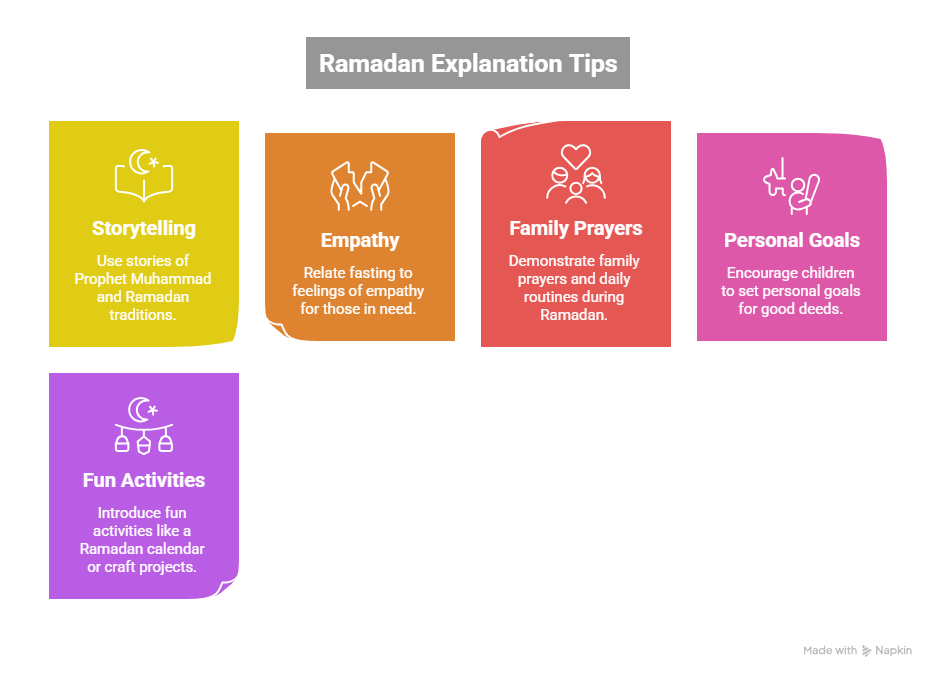
Explaining Ramadan to a child requires clarity, simplicity, and examples they can relate to. Children often ask questions like ‘Why do adults fast?’ or ‘Why is Ramadan important?’ Parents can answer directly while linking explanations to real-life experiences.
Tips for Explaining Ramadan:
- Use storytelling to highlight the life of Prophet Muhammad (PBUH) and the traditions of Ramadan.
- Relate fasting to feelings of empathy for those in need.
- Demonstrate family prayers and daily routines during Ramadan.
- Encourage children to set personal goals for good deeds.
- Introduce fun activities, such as a Ramadan calendar or craft projects.
Clear explanations help children understand the spiritual significance of Ramadan and develop a personal connection with Islamic practices. By gradually introducing concepts, children feel confident and motivated. For a more structured approach, parents can enroll children in our online Tajweed and Quran classes to build their knowledge before Ramadan. These lessons reinforce what children learn at home, making the month spiritually enriching for the whole family.
When Should a Child Start Fasting in Islam?
Children’s readiness for fasting depends on age, health, and maturity. Islam encourages gradual introduction rather than forcing full-day fasting at a young age. Parents can start with shorter fasting periods or skipping one meal to help children adjust.
Starting around age 7–10, many children can attempt partial fasting under parental supervision. By ages 12–14, children are often ready for full fasting, though this varies from child to child. It’s essential to balance religious guidance with health considerations to ensure children do not feel pressured or overwhelmed.
With consistent support and encouragement, children gradually develop discipline, patience, and understanding of Ramadan. Our Perfect Salah and Namaz classes provide additional guidance to ensure kids are spiritually prepared as they learn correct prayer practices. Gradual exposure ensures a positive, fulfilling, and safe fasting experience for children during Ramadan.
FAQs About Preparing Children for Ramadan
- How can I make fasting enjoyable for my child?
- Encourage partial fasting, involve them in meal prep, and use fun charts or rewards for motivation.
- What activities can help children understand Ramadan?
- Storytelling, Quran memorization, arts and crafts, and charity projects make learning interactive.
- At what age should children start fasting?
- Partial fasting can start around ages 7–10; full fasting often begins around 12–14, depending on maturity and health.
- How do I teach my child about the spiritual meaning of Ramadan?
- Explain values such as empathy, patience, and charity with relatable examples and real-life situations.
- Can online classes help my child prepare for Ramadan?
- Yes, our online courses provide Quran, Tajweed, and Salah lessons that reinforce home learning and ensure spiritual readiness.
Conclusion
Preparing children for Ramadan is a journey of patience, creativity, and guidance. By introducing age-appropriate activities, simple explanations, and structured learning, parents can make the holy month both enjoyable and spiritually rewarding. Our free trial classes and structured online courses ensure your child is ready to embrace Ramadan with confidence and understanding. Start today to make this Ramadan memorable for your family, and help your child develop lifelong Islamic habits.