


Ramadan is the holiest month in Islam, observed by millions of Muslims worldwide. Understanding Ramadan in Islam helps believers connect spiritually, follow religious obligations, and cultivate discipline. This guide covers its meaning, significance in the Quran, history, daily routines, and benefits of fasting. Learn practical tips for observing Ramadan while balancing work, family, and personal life. Whether you are a first-time observer or seeking to deepen your understanding, this article provides clear guidance and answers common questions about Ramadan.
Understanding Ramadan: Meaning and Significance
Ramadan is the ninth month of the Islamic lunar calendar and a period of fasting, reflection, and spiritual growth. What Ramadan means goes beyond abstaining from food and drink—it is about self-discipline, empathy for the needy, and connecting deeply with Allah through prayer and charity. The word “Ramadan” comes from the Arabic root “ramida,” meaning scorching heat, symbolising the purification of one’s soul through devotion and self-restraint.
The importance of Ramadan in Islam is highlighted in the Quran and Hadith, making it a time for Muslims to strengthen faith, improve character, and engage in acts of kindness. Daily life during Ramadan involves structured routines such as pre-dawn meals (Suhoor), fasting, Iftar, Taraweeh prayers, Quran recitation, and charitable acts. For learners seeking structured Islamic knowledge, online programs like Madrasatun Nurul Ilm offer classes on the Quran, Tajweed, and an effective understanding of Ramadan practices.
Key Elements and Daily Practices of Ramadan
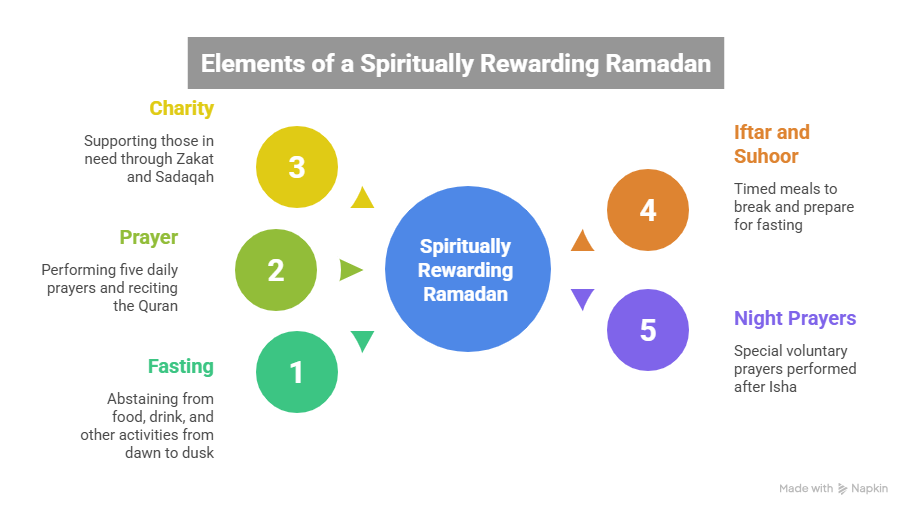
Observing Ramadan in Islam requires attention to rituals and daily practices that ensure a spiritually rewarding experience.
- Fasting (Sawm): Abstaining from food, drink, smoking, and sexual activity from Fajr to Maghrib.
- Prayer and Quran Recitation: Maintaining five daily prayers and reciting the Quran with understanding.
- Charity (Zakat and Sadaqah): Supporting those in need, emphasising empathy and social responsibility.
- Iftar and Suhoor: Timed meals to break and prepare for fasting, creating balance and energy.
- Night Prayers (Taraweeh): Special voluntary prayers performed after Isha during Ramadan nights.
These practices help Muslims align daily routines with spiritual objectives. Beginners or busy professionals can benefit from online Quran courses that offer structured lessons and practical tips for maintaining consistency throughout Ramadan.
History, Facts, and Significance of Ramadan
Ramadan carries deep historical and spiritual significance. It commemorates the month in which the Quran was revealed to Prophet Muhammad (PBUH), making it a time for reflection and worship. The fast is a central pillar of Islam and has been practised for over 1,400 years.
| Aspect | Details | Significance |
| Month | Ninth month of Islamic calendar | Sacred period for spiritual purification |
| Duration | 29–30 days depending on lunar sighting | Encourages discipline and self-control |
| Fasting Hours | Dawn (Fajr) to Sunset (Maghrib) | Builds empathy and patience |
| Night Prayers | Taraweeh | Enhances Quranic connection |
| Charitable Acts | Zakat & Sadaqah | Social responsibility and community support |
Understanding these historical facts helps believers appreciate the significance of Ramadan in Quran and the broader Islamic tradition. Online platforms like Madrasatun Nurul Ilm provide detailed lessons on the history, benefits, and spiritual objectives of Ramadan, making it accessible to learners of all ages.
Benefits of Fasting and Spiritual Growth
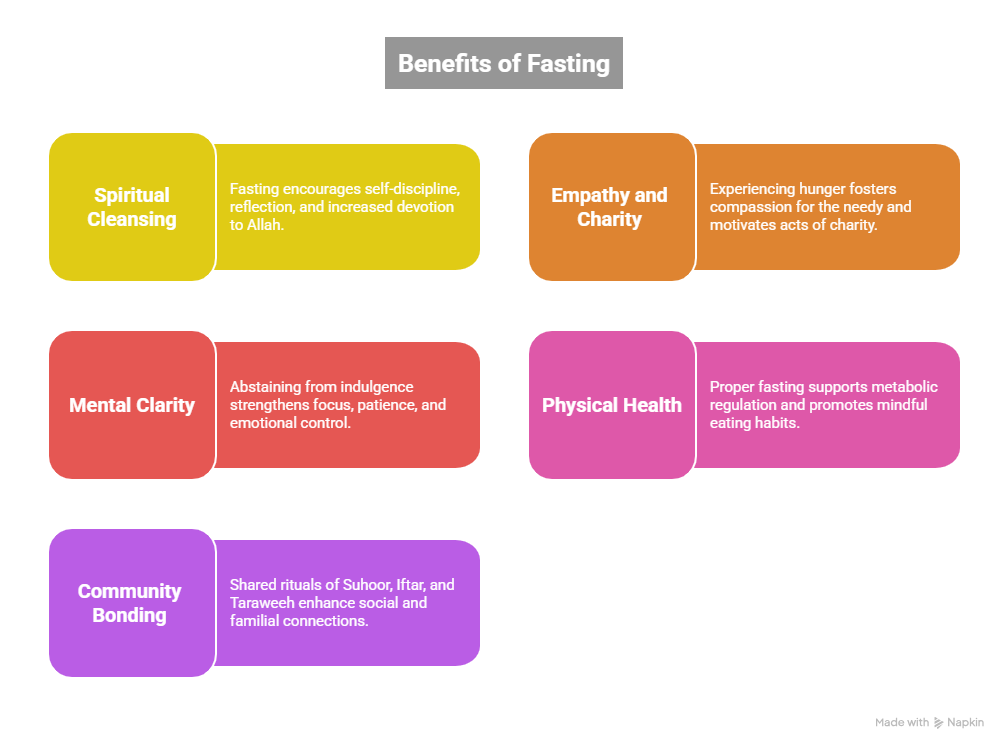
Fasting during Ramadan offers both spiritual and physical benefits for Muslims.
- Spiritual Cleansing: Fasting encourages self-discipline, reflection, and increased devotion to Allah.
- Empathy and Charity: Experiencing hunger fosters compassion for the needy and motivates acts of charity.
- Mental Clarity: Abstaining from indulgence strengthens focus, patience, and emotional control.
- Physical Health: Proper fasting supports metabolic regulation and promotes mindful eating habits.
- Community Bonding: Shared rituals of Suhoor, Iftar, and Taraweeh enhance social and familial connections.
These benefits make Ramadan a holistic experience for Muslims. Structured guidance through online Quran and Islamic classes can help beginners or expatriates maintain consistency and spiritual focus, especially for those balancing family, work, and faith commitments in foreign countries.
Common Challenges and Solutions During Ramadan
Many Muslims face challenges while observing Ramadan, such as balancing work schedules, maintaining energy levels, and keeping children engaged in fasting and prayer.
Time zone differences, especially for expatriates, can affect the timing of Suhoor and Iftar. Language barriers may make understanding Quranic teachings harder for non-Arabic speakers. Lack of motivation or inconsistency in prayers can reduce spiritual reward.
Structured online programs, such as those from Madrasatun Nurul Ilm, provide clear guidance, Bengali-Arabic support, and flexible schedules. These courses help learners understand the fasting hours, daily routines, and spiritual practices of Ramadan, making the holy month manageable and meaningful, regardless of lifestyle or location.
FAQs About Ramadan in Islam
1. How long is Ramadan?
Ramadan lasts 29–30 days, depending on the lunar calendar and moon sighting.
2. What is the main purpose of Ramadan in Islam?
It is a month of fasting, spiritual reflection, Quran recitation, and increased devotion to Allah.
3. What are the daily practices during Ramadan?
Daily practices include fasting from Fajr to Maghrib, praying, reciting the Quran, performing Taraweeh, and giving charity.
4. What are the benefits of fasting in Ramadan?
Fasting promotes spiritual growth, empathy, self-discipline, and physical well-being.
5. Can children or travellers fast during Ramadan?
Children are exempt until puberty, and travellers or the sick may defer fasting and make up later.
Conclusion
Understanding Ramadan in Islam helps Muslims observe this sacred month correctly, spiritually, and practically. From fasting and prayers to charity and daily routines, awareness of its meaning and benefits strengthens faith and personal growth. Platforms like Madrasatun Nurul Ilm offer structured Quran, Tajweed, and Islamic lessons, making it easier for busy families and expatriates to follow Ramadan’s practices.
Enrol in a free trial class today to learn step-by-step guidance, practical routines, and spiritual tips. This ensures a fulfilling Ramadan experience that aligns with both daily life and religious obligations, helping you maximise the blessings of the holy month.