

Fasting during Ramadan is one of the most important pillars of Islam, but understanding the rules correctly ensures your fast is valid and spiritually rewarding. This guide explains the rules of fasting during Ramadan, common mistakes to avoid, and tips for a healthy, successful fast. Learn how to fast correctly, stay hydrated, and maintain energy throughout the day. We also cover special cases like children, missed fasts, and medical concerns. By the end, you’ll have a clear, practical roadmap for observing Ramadan in 2026.
Understanding the Rules of Fasting During Ramadan
Fasting during Ramadan is more than abstaining from food and drink; it’s a spiritual discipline that strengthens your faith and self-control. The fast begins at Fajr (dawn) and ends at Maghrib (sunset). During this time, Muslims must refrain from eating, drinking, smoking, and sinful behavior. Knowing the rules prevents unintentional mistakes that could break your fast, ensuring your worship is accepted.
Many beginners ask questions like “Can I brush teeth while fasting?” or “Does vomiting break the fast?” Learning these rules ahead of time helps avoid confusion and ensures your fast is valid. For children, fasting rules differ, and it’s essential to introduce them gradually. Additionally, missing fasts due to illness or travel must be compensated for in accordance with Islamic teachings. For those interested in learning how to fast correctly, our online courses offer structured guidance: All Courses.
Common Mistakes That Break the Fast
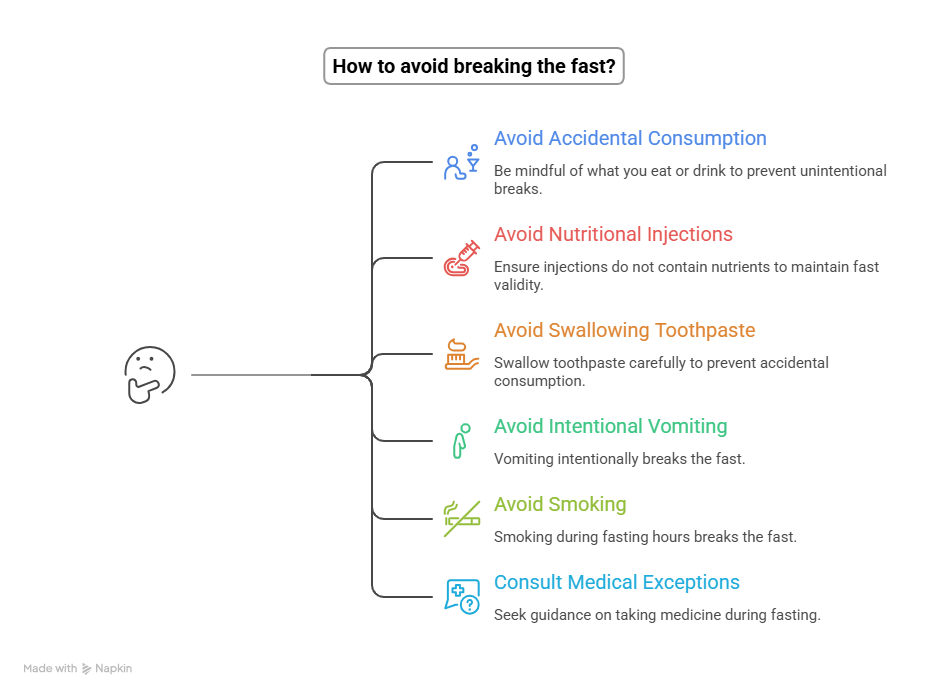
It’s easy to unintentionally break your fast if you’re unaware of the rules. Here are some common mistakes:
- Eating or drinking accidentally while thinking you’re allowed
- Using injections that contain nutrition
- Swallowing toothpaste while brushing
- Vomiting intentionally
- Smoking during fasting hours
Avoiding these mistakes ensures your fast is valid and spiritually beneficial. Many students ask questions about medical exceptions, like “Can I take medicine while fasting Ramadan?” The general rule is that medicine that nourishes the body breaks the fast. Learning these nuances helps prevent confusion, especially for beginners or children. For a detailed guide on memorizing Qur’an and following Islamic rituals correctly, check our courses here: All Courses.
Suhoor and Iftar Tips for Energy and Hydration
Eating smartly during Suhoor and Iftar is essential to sustain energy and stay hydrated during long fasting hours. The table below outlines the best meal choices for Suhoor and Iftar:
| Meal Type | Recommended Foods | Benefits |
| Suhoor | Oats, whole grains, eggs, fruits | Long-lasting energy, slow digestion |
| Iftar | Dates, water, soups, lean protein | Quick energy replenishment, hydration |
| Snacks | Nuts, yogurt, fruits | Healthy calorie boost, prevents overeating |
Eating nutrient-rich meals and drinking enough water between Iftar and Suhoor keeps you healthy and focused. Avoid sugary foods that cause energy crashes. Maintaining hydration is crucial, especially in hot regions like Bangladesh. For children, gradually introducing fasting and focusing on proper nutrition ensures they learn safely. For those seeking structured online guidance, our online Quran and Islamic education courses provide step-by-step teaching: All Courses.
Special Cases: Missed Fasts, Children, and Medical Exceptions
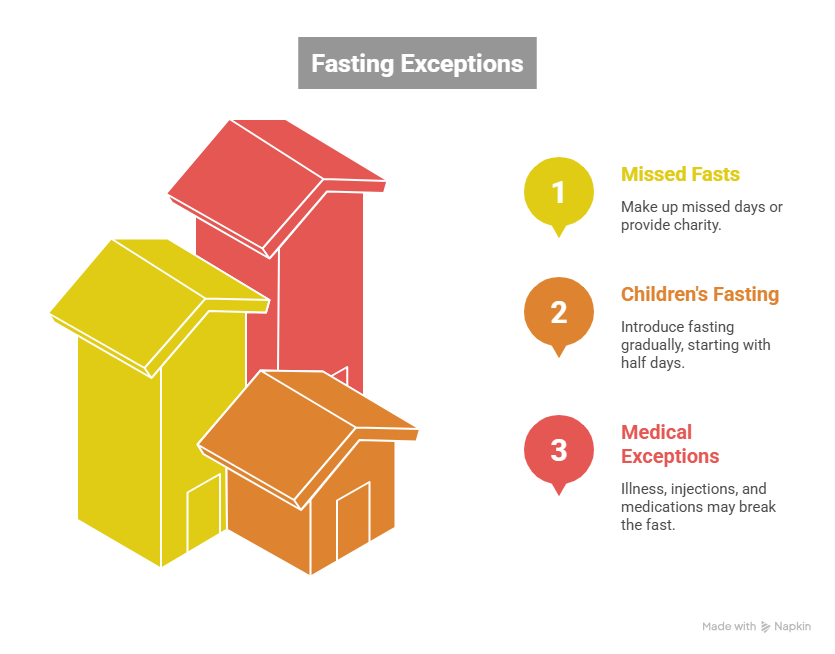
Fasting rules adapt to specific circumstances:
- Missed Fasts in Islam: Make up the missed days after Ramadan (Qada) or provide Fidyah (charity) if unable.
- Fasting Rules for Children in Islam: Introduce fasting gradually, starting with half days or select days.
- Medical Exceptions: Illness, injections, and medications may break the fast; consult a scholar if unsure.
Understanding these exceptions prevents mistakes and provides peace of mind. Many learners worry about “Does injection break fast?” or “Can children fast safely?” Following Islamic guidance ensures proper observance. Practical examples include offering children light meals during Suhoor or adjusting travel schedules. For a full, detailed guide, our institute offers a free Interactive Sessions trial class.
Tips to Stay Healthy and Energized While Fasting
Proper planning helps avoid fatigue and dehydration during Ramadan:
- Eat balanced Suhoor meals rich in protein and fiber
- Drink plenty of water between Iftar and Suhoor
- Avoid excessive caffeine and sugar
- Take short naps if needed to maintain focus
- Practice light physical activity to stay active
By following these tips, fasting becomes more manageable and spiritually fulfilling. Many people in Bangladesh struggle with energy during long summer fasts; proper nutrition and hydration are essential. For guidance on learning how to fast correctly and maintaining healthy routines, our online courses provide expert support: All Courses.
FAQs About Fasting During Ramadan
- Can I brush my teeth while fasting?
Yes, but avoid swallowing toothpaste to ensure your fast remains valid.
- Does vomiting break the fast?
Unintentional vomiting does not break the fast, but intentional vomiting does.
- Can I take medicine while fasting during Ramadan?
Oral medication breaks the fast if it nourishes the body; topical medicine does not.
- Does the injection break fast?
Non-nutritive injections (like vaccines) do not break the fast; nutrient injections do.
- What are the rules of missed fasts in Islam?
Missed fasts must be made up after Ramadan (Qada) or compensated with charity (Fidyah) if unable to do so.
Conclusion
Fasting during Ramadan is a deeply rewarding spiritual practice when done correctly. By understanding the rules of fasting during Ramadan, avoiding mistakes, and following proper nutrition and hydration, you can make your fasts valid and beneficial. For anyone seeking structured Islamic education, Madrasatu Nurul Ilm offers online courses for all ages, from
Quran memorization to perfecting Salah.
💡 Start your learning journey today! Join our Free Trial Class or explore our All Courses to gain authentic Islamic knowledge from experienced teachers. For guidance, contact us at 01834-756502 or email madrasatunuurulilm912@gmail.com.